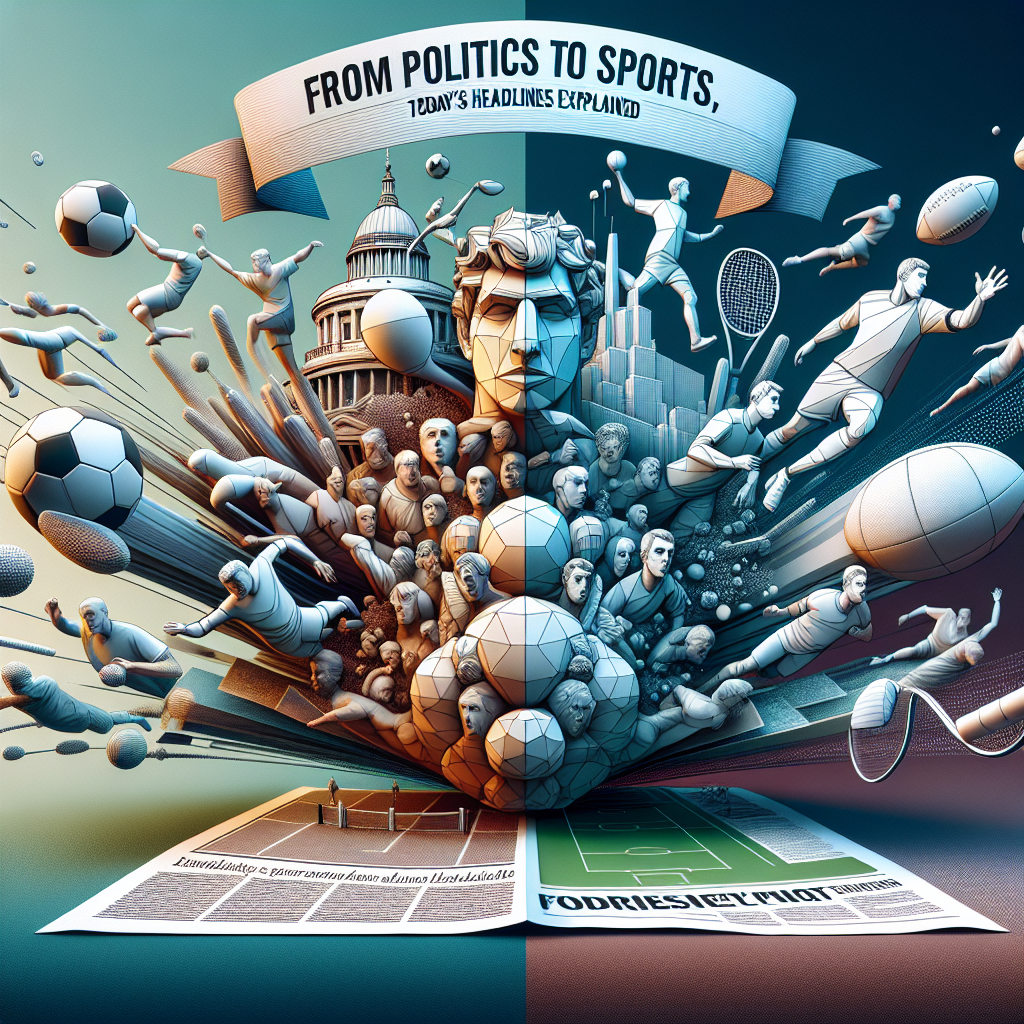
In a rapidly evolving global landscape, the interplay between politics and sports has garnered significant attention. This article delves into the current headlines that straddle both arenas, examining their implications and the broader narratives at play. From high-stakes political decisions affecting sports leagues to the role of athletes in societal issues, we unravel the connections that define our world.
Table of Contents
- Introduction
- The Political Landscape and Its Influence on Sports
- Recent Headlines in Politics Affecting Sports
- Athletes as Social Activists
- The Impact of Sports on Political Discourse
- Conclusion
Introduction
The relationship between politics and sports is intricate and multifaceted. As political climates shift, so too do the narratives and dynamics within the sporting realm. Understanding these connections is crucial for entrepreneurs, marketers, and anyone with a vested interest in current events. This article explores the latest headlines, providing clarity and insight into how politics shapes the world of sports.
The Political Landscape and Its Influence on Sports
Politics has long been intertwined with sports. Major sporting organizations often find themselves navigating political waters, whether through legislation, government policy, or socio-political movements. For example, tax breaks, labor laws, and health regulations can significantly impact how leagues operate and how sports are marketed.
Global Examples of Political Influence
Countries like the United States and China exemplify this relationship. The U.S. has seen various policies affecting player salaries, endorsement deals, and even league structure due to political maneuvers. Similarly, China’s government controls sports funding and promotion, impacting international events held within its borders.
Economic Impact
The economic ramifications of political decisions extend into the sports sector. Policies that influence economic growth, such as infrastructure investment, can directly benefit sporting events. For instance, cities that host major sports events often see a surge in tourism and local business.
Recent Headlines in Politics Affecting Sports
Government Policies Shaping Sports Leagues
Recent headlines have spotlighted various government policies that are reshaping how sports leagues function. For instance, new safety regulations in response to public health crises, such as the COVID-19 pandemic, have mandated changes in how sports events are organized.
Case Study: The NFL and Health Regulations
The National Football League (NFL) implemented extensive health protocols during the pandemic. Players, teams, and the league itself had to adapt quickly to abide by both health guidelines and fan safety measures. These regulations have led to a discussion about the long-term sustainability of such policies within the league.
Political figures often use sports as a platform for their agenda. Recent initiatives by lawmakers to support youth sports programs or combat undue influence in collegiate athletics demonstrate this trend.
For example, the recent bipartisan movement to endorse amateur athletes’ rights to profit from their name, image, and likeness (NIL) highlights how politics can directly alter the landscape of collegiate sports.
Athletes as Social Activists
In today’s world, athletes are not just competitors; they are also influential voices for social change. Prominent figures in sports have increasingly used their platforms to address various issues, from racial inequality to climate change.
Examples of Athlete Activism
Athletes like LeBron James and Colin Kaepernick have become synonymous with advocacy, using their visibility to highlight pressing sociopolitical issues. Their actions reflect a growing trend among athletes to leverage their influence for greater societal good.
Highlighting the Impact of Athlete Activism
For instance, Kaepernick’s protest against racial injustice sparked a nationwide discourse, prompting discussions at all levels of society. Such movements can undoubtedly influence public opinion and even policy.
The Impact of Sports on Political Discourse
Conversely, sports can also serve as a microcosm for broader political discussions. Events like the Olympics or World Cup serve not only as athletic contests but as gatherings that place countries’ ideologies on a global stage.
International Competitions as Political Arenas
International sporting events can underscore national pride or offer insights into diplomatic relations among nations. During the Olympics, athletes often become national symbols, representing their countries beyond mere competition.
Case Studies: The Olympics and Politics
The 1936 Berlin Olympic Games exemplified how sports and political propaganda intersect. More recently, the 2022 Beijing Winter Olympics faced criticism regarding human rights issues, illustrating once again how political conversations permeate athletic competitions.
Conclusion
The interplay between politics and sports continues to evolve. As headlines unfold, it is imperative for entrepreneurs, marketers, and interested individuals to stay informed about the connections shaping our world. Understanding these dynamics can not only enhance insights into consumer behavior but also foster a more profound comprehension of societal shifts.
In an era where sports and political realms increasingly overlap, recognizing this relationship can empower individuals and businesses alike to adapt and thrive. Stay tuned for more updates on how these two worlds collide and intertwine.
Additional Reading
For further insights on related topics, check out our articles on Understanding the Role of Public Opinion and The Dynamics of Marketing in Sports.
In this evolving narrative, staying informed is crucial for navigating both the sports industry and the political context that influences it.
External Links
This article provides a comprehensive view of the intricate relationship between politics and sports, tailored for readers seeking to understand current trends and their implications.




















No Comments